
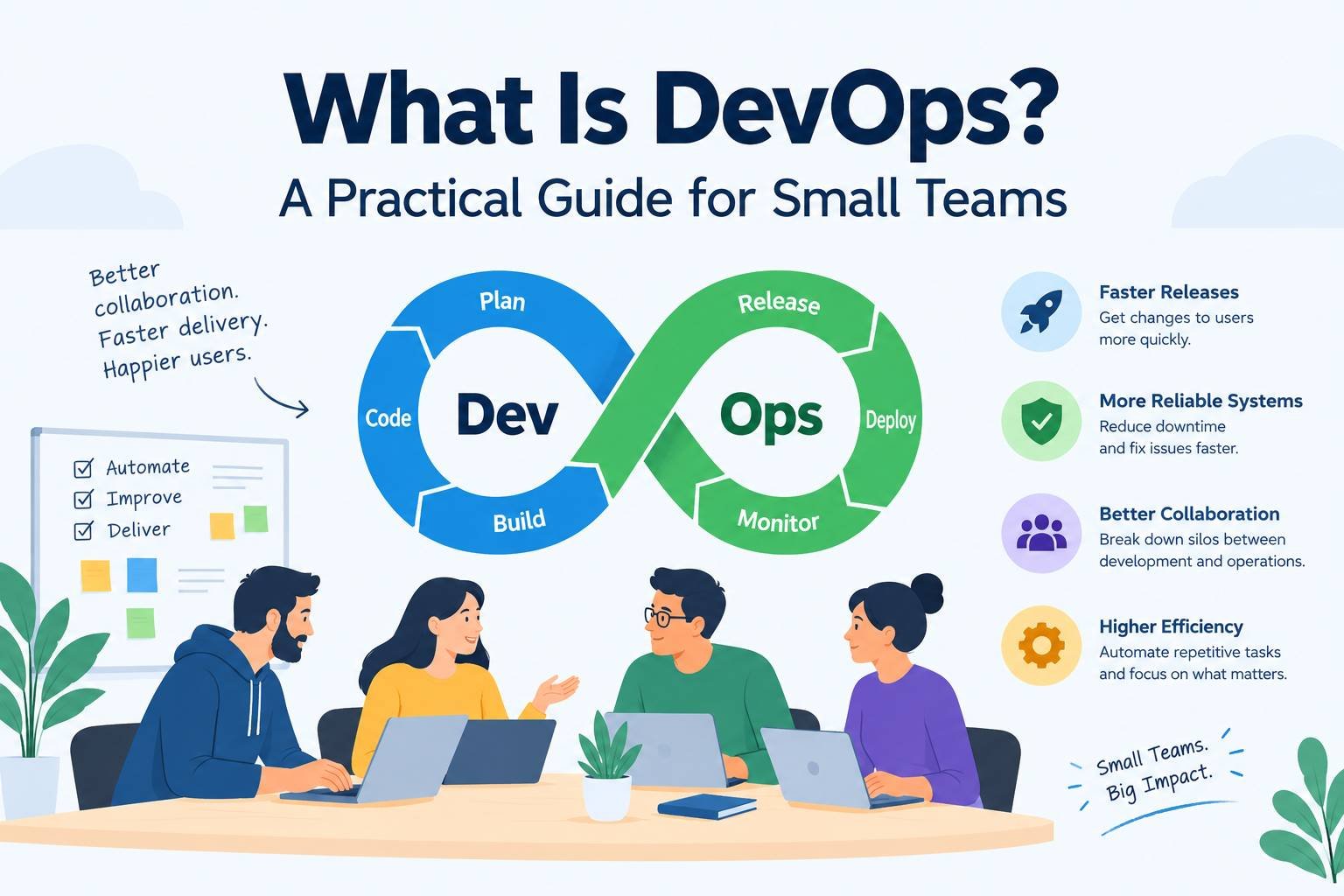
DevOps is often described with long lists of tools, but at its heart it is a simple idea: the people who build software and the people who run it should work together, with automation, so that changes reach users quickly and safely.
Large companies have whole platform teams for this. Small teams don’t, and they don’t need to. A team of three to ten developers can adopt the most valuable DevOps practices in a few weeks, often with tools they already use. This guide explains what DevOps really means, how to measure it and a practical plan for getting started.
Key Takeaways
- DevOps combines culture, practices and automation to deliver software quickly and reliably.
- The most valuable starting points are version control, automated testing, continuous integration and automated deployment.
- DORA’s five software delivery metrics give small teams a simple way to measure progress.
- Speed and stability are not trade-offs. Good teams improve both together.
What DevOps Means
The term combines development and operations. Traditionally, developers wrote code and “threw it over the wall” to an operations team, who deployed and ran it. The two groups had different goals: developers wanted to ship changes, operations wanted stability. The result was slow, risky releases and plenty of blame.
DevOps replaces this with shared responsibility. The team that builds a service also helps run it, and both sides use automation to make releases routine rather than stressful. It is often summarised by the acronym CALMS:
| Element | What It Means in Practice |
|---|---|
| Culture | Shared ownership, collaboration and learning from failures without blame. |
| Automation | Automated builds, tests, deployments and infrastructure. |
| Lean | Small batches of work, fast feedback and removing waste. |
| Measurement | Tracking delivery performance and system health. |
| Sharing | Shared knowledge, documentation and tools across the team. |
Why DevOps Matters for Small Teams
Small teams sometimes assume DevOps is only for big organisations. In fact, the benefits are often greater for small teams, because every hour spent on manual deployments or fixing avoidable bugs is an hour not spent on the product.
- Faster delivery: Changes reach customers in hours or days, not weeks.
- Fewer failures: Automated tests catch problems before users do.
- Quicker recovery: When something breaks, you can roll back or fix it fast.
- Less stress: Releases become routine, not late-night events.
- Lower dependence on individuals: Automated, documented processes mean deployments don’t rely on one person’s knowledge.
How to Measure DevOps: The DORA Metrics
The DORA research programme (originally DevOps Research and Assessment, now part of Google Cloud) has studied software delivery for more than a decade. It currently uses five software delivery performance metrics, grouped into throughput and instability:
| Group | Metric | What It Measures |
|---|---|---|
| Throughput | Change lead time | Time from committing a change to running it in production. |
| Deployment frequency | How often you deploy to production. | |
| Failed deployment recovery time | How quickly you recover when a deployment fails. | |
| Instability | Change fail rate | Share of deployments that need immediate intervention, such as a rollback or hotfix. |
| Deployment rework rate | Share of deployments that are unplanned and caused by a production incident. |
DORA’s research consistently finds that speed and stability go together: teams that deploy more often in small batches also tend to have fewer failures and recover faster.
Two recent changes are worth knowing. First, the 2025 report was renamed the State of AI-assisted Software Development, reflecting a focus on how AI tools affect delivery. Second, it replaced the familiar “low, medium, high and elite” performance groups with seven team archetypes based on a wider set of measures, including product performance, friction and burnout. DORA has always cautioned against using its findings as a fixed benchmark, so use the metrics to track your own improvement over time.
Don’t confuse the two DORAs. The EU’s Digital Operational Resilience Act (also called DORA) is a regulation for financial entities and their ICT providers. It has applied since 17 January 2025 and is unrelated to the DORA metrics, although good DevOps practices help with its resilience requirements.
The Core DevOps Practices
1. Version Control for Everything
Keep all code in a version control system such as Git, together with configuration, database migrations, infrastructure definitions and deployment scripts. If it isn’t in version control, it can’t be reviewed, repeated or rolled back reliably.
2. Small, Frequent Changes
Work in small batches. A change that touches ten lines is easier to review, test and roll back than one that touches ten thousand. Use short-lived branches or trunk-based development, and merge to the main branch at least daily where possible.
3. Continuous Integration (CI)
Every time someone pushes code, an automated pipeline builds the application and runs the tests. Problems are found within minutes, while the change is still fresh in the developer’s mind. Hosted CI services, such as GitHub Actions, GitLab CI and others, make this easy to set up.
4. Automated Testing
A healthy test suite usually includes:
- Unit tests for individual functions and classes.
- Integration tests for how components work together, such as with the database.
- A small number of end-to-end tests for the most important user journeys, such as signing up or checking out.
Focus on the tests that protect your most important features. Perfect coverage isn’t the goal; confidence is.
5. Continuous Delivery and Deployment (CD)
Continuous delivery means every change that passes the pipeline is ready to deploy with one click. Continuous deployment goes further and deploys automatically. Either way, deployments should be automated, repeatable and identical across environments.
Safer release techniques include:
- Feature flags: Let you deploy code but switch features on gradually.
- Blue-green or rolling deployments: Help avoid downtime.
- Automated rollbacks: Restore a previous version when health checks fail.
6. Infrastructure as Code
Define servers, networks, databases and permissions in code, using tools such as Terraform, OpenTofu, Pulumi or your cloud provider’s templates. Environments become reproducible, changes are reviewed like any other code and you can rebuild quickly after a failure.
7. Monitoring, Logging and Alerting
You can’t fix what you can’t see. At minimum:
- Uptime and health checks for your application.
- Centralised logs that you can search.
- Metrics such as error rates, response times and resource usage.
- Alerts that go to the right person for problems that need action, and not for noise.
8. Blameless Incident Reviews
When something goes wrong, focus on what happened and how to prevent it, not on who to blame. Google’s guidance on postmortem culture explains the approach. Write a short review, agree on one or two improvements and track them to completion.
9. Security Built In (DevSecOps)
Add security checks to the pipeline rather than leaving them to the end:
- Dependency scanning for known vulnerabilities.
- Secret scanning to stop passwords and API keys being committed.
- Static analysis for common coding mistakes.
- Least-privilege access for deployment credentials.
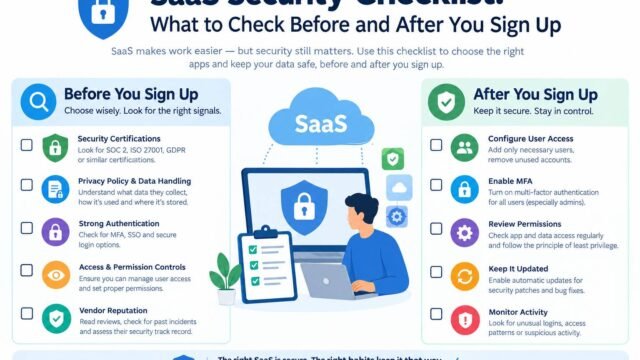
The UK NCSC’s secure development and deployment guidance is a useful reference. For the wider picture, see our SaaS security checklist.
A Practical 30-Day Plan for Small Teams
Week 1: Foundations
- Make sure all code and configuration are in Git.
- Protect the main branch and require code review for changes.
- Write down your current deployment steps.
Week 2: Continuous Integration
- Set up a CI pipeline that builds and runs existing tests on every push.
- Add tests for your most important features.
- Add dependency and secret scanning.
Week 3: Automated Deployment
- Automate deployment to a staging environment.
- Automate deployment to production with one command or button.
- Practise a rollback.
Week 4: Visibility and Learning
- Set up uptime monitoring, centralised logs and basic alerts.
- Start tracking deployment frequency, change lead time and change fail rate.
- Hold your first short retrospective on how the month went.
After that, improve step by step: add infrastructure as code, feature flags and better tests where they bring the most value.
DevOps and Architecture
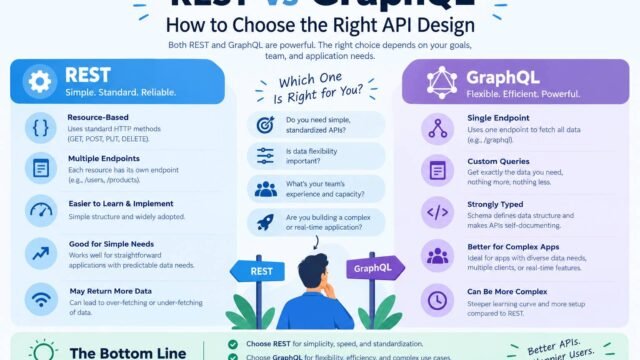
DevOps practices matter even more as systems grow. A well-structured monolith with good CI/CD is far easier to run than many services without it. Our pillar guide to monolith vs microservices explains why operational maturity should come before splitting into services, and our guide to serverless computing covers an option that removes some operational work.
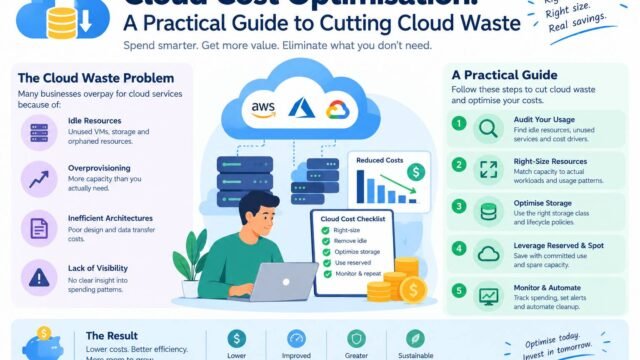
DevOps also helps control costs, because automated environments are easier to shut down when not needed. Our guide to cloud cost optimisation covers this in more detail.
What About AI Tools?
AI coding assistants can speed up writing code and tests, but DORA’s research suggests their benefits depend on the system around them. Strong foundations, such as small batches, good tests, clear documentation and fast feedback, help teams turn individual productivity gains into better delivery. Without them, AI can simply produce more changes for an already overloaded pipeline. If you are adopting AI tools, our guide to an AI governance framework for small teams explains how to set sensible rules.
Common Mistakes to Avoid
- Buying tools before changing habits: Tools support DevOps; they don’t create it.
- Automating a broken process: Simplify first, then automate.
- Ignoring flaky tests: Tests that fail randomly teach people to ignore failures.
- Too many alerts: Alert only on problems that need someone to act.
- Using metrics to compare or punish people: Use them to improve the system.
Kaushal’s Note: In my opinion, DevOps is not about using the latest tools or building a complicated infrastructure; it’s about making software development and delivery simpler, faster, and more reliable. For small teams, I believe the best approach is to start with the basics, such as version control, automated testing, continuous integration, and a dependable deployment process, rather than trying to implement everything at once. Every team has different needs, budgets, and technical challenges, so there is no single DevOps strategy that works for everyone. My recommendation is to identify the biggest bottleneck in your current workflow, improve it step by step, and measure whether those changes actually help. Ultimately, successful DevOps is not about how many tools a team uses, but how confidently it can deliver valuable software, respond to problems, and continuously improve.
Conclusion
DevOps for small teams is about making change safe and routine. Put everything in version control, work in small batches, automate testing and deployment, monitor what matters and learn from every incident. Measure progress with the DORA metrics and improve a little each month. The result is faster delivery, fewer late-night emergencies and more time for building the product your customers need.